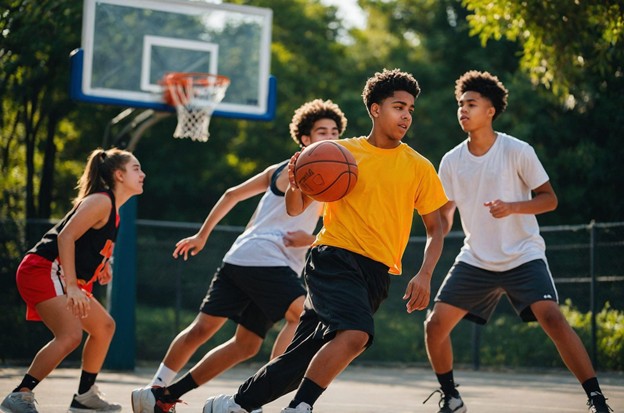
In competitive high school basketball, coaches often judge outcomes by points, rebounds, and assists. Christopher Sohm emphasizes that many of the most important contributions happen beyond the box score, shaping momentum, control, and ultimately the outcome of a game.
Statistics offer a snapshot, but they seldom capture the complete picture of how teams secure victories. Details such as defensive positioning, communication, spacing, and decision-making often determine how effectively a team performs under pressure. These elements may not appear in official records, but they consistently influence game flow and team success.
Teams that understand and execute these less visible aspects gain a meaningful edge. By focusing on discipline, awareness, and consistency, players contribute to a collective performance that extends far beyond measurable metrics.
Effort Plays That Shift Momentum
Not every impactful play results in a stat. Hustle, positioning, and effort often determine which team controls the flow of the game.
These include:
- Diving for loose balls
- Chasing down defensive recoveries
- Making the extra effort on contested possessions
- Rotating quickly to cover defensive gaps
These moments may not appear on a stat sheet, but they influence energy, confidence, and momentum throughout the game.
Defensive Communication and Awareness
Strong defense is not just about individual ability; it depends heavily on communication and awareness. Teams that talk effectively on defense are better positioned to handle fast-paced situations.
Key elements include:
- Calling out screens and switches
- Maintaining help-side awareness
- Anticipating opponent movement
- Staying connected as a unit
Without communication, even talented defensive players can struggle to stay organized.
Spacing and Off-Ball Movement
Offense is often judged by scoring, but scoring opportunities are created through movement that doesn’t involve the ball.
Important factors include:
- Proper floor spacing to open driving lanes
- Timely cuts and rotations
- Setting effective screens
- Creating opportunities for teammates rather than forcing plays
These actions rarely show up in traditional stats but are essential for efficient offense.
Decision-Making Under Pressure
Players’ responses in critical moments often determine the outcome of games. Good decision-making can prevent mistakes and create opportunities.
This process includes:
- Choosing when to slow down or speed up the game
- Avoiding unnecessary risks
- Recognizing defensive setups
- Making the right pass rather than forcing a shot
These decisions influence the outcome even if they don’t result in immediate statistics.
Bench Energy and Team Support
Players who are not on the court still contribute to the game environment. Bench energy can have a noticeable impact on team performance.
This is reflected through:
- Encouragement and positive communication
- Staying engaged with the flow of the game
- Supporting teammates during difficult stretches
- Maintaining focus and readiness
A strong bench presence helps sustain team energy and morale.
Discipline and Execution
Discipline is often the difference between close wins and losses. Teams that consistently execute their game plan tend to perform better over time.
This process involves:
- Following coaching strategies
- Maintaining focus during critical moments
- Avoiding unnecessary fouls or turnovers
- Staying consistent in both offense and defense
Execution is not always visible in stats, but it determines how effectively a team performs.
Controlling the Pace of the Game
Understanding and controlling tempo is another key factor that does not always appear in the box score.
Teams that manage pace effectively can:
- Slow the game down to maintain control
- Speed it up to create pressure
- Adjust based on the opponent’s strengths and weaknesses
This strategic control often influences the outcome more than individual statistics.
Trust and Team Chemistry
Team chemistry is built over time and is reflected in how players interact on the court. Trust allows teams to function more effectively in high-pressure situations.
This is seen in:
- Players making selfless decisions
- Confidence in teammates to execute plays
- Consistent communication and support
- A shared understanding of roles and responsibilities
Strong chemistry leads to smoother execution and fewer breakdowns.
Consistency in Small Details
Winning teams often separate themselves through consistency in small details. These details may seem minor, but they add up over the course of a game.
Examples include:
- Proper positioning on both ends of the court
- Quick transitions between offense and defense
- Maintaining focus throughout all four quarters
- Executing fundamentals under pressure
These habits create a foundation for reliable performance.
Final Thoughts
The stat sheet does not solely determine the outcome of high school basketball games. The unseen aspects of effort, communication, discipline, and decision-making play a critical role in shaping outcomes.
Teams that focus on these details develop a competitive advantage that goes beyond numbers. By valuing the contributions that are not always measured, players and coaches can build a more complete and effective approach to the game.