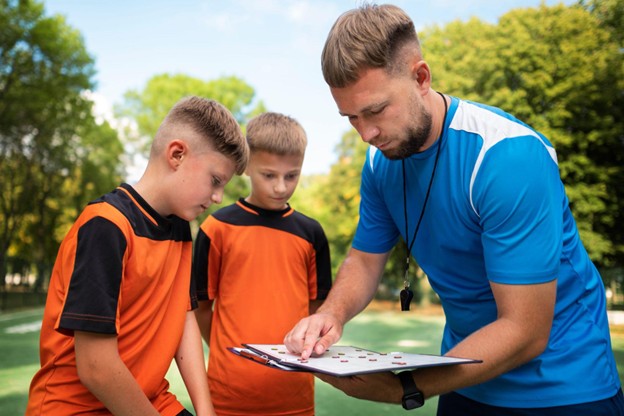
In competitive school athletics, coaches often measure success by wins and losses. Christopher Sohm exemplifies a coaching philosophy that prioritizes multi-sport experience in the cultivation of well-rounded athletes, emphasizing that development occurs well in advance of visible results on a scoreboard.
Drawing from a background in both basketball and football, this approach emphasizes how daily habits, discipline, and exposure to different competitive environments contribute to long-term growth. Rather than encouraging early specialization, coaching across multiple sports highlights how varied physical, mental, and strategic demands support more complete athlete development.
When athletes switch sports, they are not only learning new games; they are also building a stronger base that makes them more adaptable, resilient, and better over time.
Why Multi-Sport Development Still Matters
Recently, there has been increasing pressure on young athletes to specialize early. While such specialization can lead to short-term gains, it often limits long-term growth. Multi-sport participation, on the other hand, encourages a more balanced and sustainable path.
Athletes who compete in multiple sports tend to:
- Develop diverse movement patterns, improving overall athleticism
- Build muscle groups more evenly, reducing injury risk
- Stay mentally engaged by avoiding repetitive routines
- Gain exposure to different coaching styles and systems
This variety creates athletes who are not only skilled but also adaptable, an essential quality in competitive sports.
Football: Building Structure, Strength, and Accountability
Football introduces athletes to a highly structured environment where discipline and execution are critical. Every position has a defined role, and success depends on how well each player performs within that system.
Through football, athletes learn:
- The importance of physical toughness and conditioning
- How to operate within clearly defined responsibilities
- The value of team accountability, where one mistake can impact the entire unit
- How to execute under high-pressure, high-contact conditions
These lessons extend beyond the field. The discipline required in football often shapes how athletes approach preparation, practice, and competition in other sports.
Basketball: Developing Awareness and Decision-Making
Basketball presents a different challenge. It is fast-paced, fluid, and constantly changing. Unlike football, where plays are structured, basketball requires continuous decision-making in real time.
Athletes develop:
- Spatial awareness, understanding positioning and movement
- The ability to make quick decisions under pressure
- Improved agility, balance, and endurance
- A sense of timing and rhythm within a constantly shifting game
This environment forces athletes to think independently while still functioning as part of a team. It complements the structure of football by encouraging adaptability and creativity.
How Skills Transfer Between Sports
One of the most valuable aspects of coaching multiple sports is seeing how skills carry over from one environment to another. Development is not isolated; progress in one sport often enhances performance in another.
Examples of skill transfer include:
- Footwork from basketball improving mobility and positioning in football
- Strength and conditioning from football supporting physical play in basketball
- Decision-making skills enhancing game awareness across both sports
- Communication habits strengthening team coordination in different settings
These connections reinforce the notion that athletic development is interdependent, transcending the boundaries of a single sport.
Mental Toughness Through Constant Transition
Switching between sports requires more than physical adjustment; it demands mental flexibility. Each season brings new expectations, roles, and challenges.
This process helps athletes build:
- The ability to adapt quickly to new systems
- Confidence in learning and applying different strategies
- Resilience when facing unfamiliar situations
- A stronger sense of focus and accountability
Athletes who regularly transition between sports become more comfortable with change, which is a critical advantage in competitive environments.
Preventing Burnout and Overuse Injuries
One of the hidden benefits of multi-sport participation is injury prevention. Repeating the same movements year-round can lead to overuse injuries and mental fatigue.
By participating in different sports, athletes:
- Use different muscle groups and movement patterns
- Reduce strain on specific joints and areas
- Stay mentally refreshed by changing competitive environments
- Maintain a healthier balance between intensity and recovery
This improves longevity in sports and supports consistent performance over time.
Understanding Team Dynamics in Different Contexts
Each sport has its own team structure, pace, and communication style. Experiencing multiple environments helps athletes better understand how teams function.
They learn to:
- Adjust to different coaching approaches
- Take on varying roles depending on the sport
- Communicate effectively in different game situations
- Contribute to team success in multiple ways
This versatility makes athletes more valuable teammates and more aware competitors.
The Coaching Perspective: Developing the Whole Athlete
Coaching multiple sports provides a broader view of athlete development. Instead of focusing on sport-specific performance alone, it emphasizes building a complete athlete.
This approach prioritizes the following:
- Strong fundamentals that apply across sports
- Long-term development over short-term results
- A balance between physical skills and mental growth
- Encouraging athletes to connect the lessons between sports
By focusing on overall growth, coaches can prepare athletes for success beyond a single season or sport.
Long-Term Impact on Performance and Growth
Athletes who develop through multiple sports often demonstrate stronger long-term performance. Their ability to adapt, learn, and compete in different environments gives them a distinct advantage.
They are more likely to:
- Adjust quickly to new challenges
- Maintain consistency under pressure
- Continue improving as competition increases
- Stay engaged and motivated over time
These qualities extend beyond sports, influencing how they approach challenges in other areas of life.
Final Thoughts
Coaching multiple sports provides valuable information about what it takes to build complete athletes. By combining the structure and discipline of football with the fluidity and awareness required in basketball, athletes develop a more balanced and resilient skill set.
The result is not just better performance but also stronger adaptability, deeper understanding, and a more sustainable approach to growth. In the long run, it is this well-rounded development that defines true athletic success.