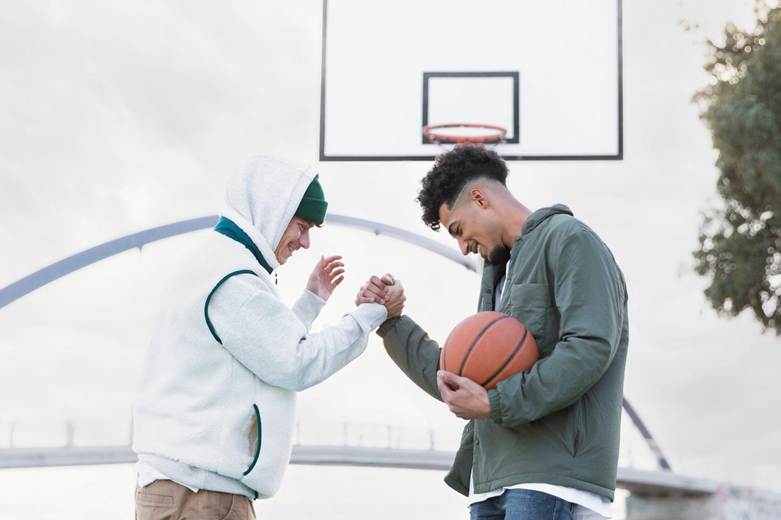
Resilience is not motivational; it is structural, stresses Christopher Sohm. Comebacks are not emotional accidents. They are engineered outcomes rooted in preparation, conditioning, and disciplined response patterns developed long before the scoreboard demands them.
Across both football and basketball, momentum swings are inevitable. What separates programs that recover from those that unravel is not talent alone. It is the presence of a repeatable framework that teaches athletes how to respond when adversity strikes.
Resilience, in this context, becomes a skill set.
Understanding the Anatomy of a Comeback
A comeback rarely begins with a dramatic play. It begins with stabilization.
When teams fall behind, predictable responses often emerge:
- Rushed decision-making
- Communication breakdowns
- Overextension on defense
- Forced offensive execution
- Emotional volatility
Programs that reverse momentum do not eliminate these pressures. They train athletes to navigate them.
A structured comeback framework focuses on three phases:
- Emotional Reset
- Tactical Simplification
- Incremental Momentum Recovery
Each phase is rehearsed during practice, not improvised during competition.
Emotional Reset as the First Adjustment
In both football and basketball, emotional escalation often precedes tactical collapse. Teaching athletes to regulate response becomes foundational.
Effective programs integrate:
- Controlled breathing protocols between plays
- Defined huddle language focused on execution
- Clear sideline communication hierarchies
- Leadership cues from designated captains
- Practice drills simulating scoreboard deficits
Emotional neutrality is not passive. It is strategic. When athletes learn to slow internal tempo, external tempo becomes manageable.
Resilience begins with physiological control.
Cross-Sport Transfer: Physicality and Tempo
Coaching both football and basketball provides a unique opportunity to transfer resilience principles between environments.
Football cultivates:
- Physical tolerance under sustained contact
- Assignment discipline within structured systems
- Composure during clock-driven situations
Basketball develops:
- Rapid decision-making in confined space
- Continuous defensive recovery
- Momentum awareness through scoring runs
When resilience training is consistent across both sports, athletes begin to internalize adaptable response patterns.
For example:
- Fourth-quarter football composure can mirror late-game basketball execution.
- Defensive discipline in basketball can reinforce gap responsibility in football.
- Special teams urgency translates into transition defense awareness.
This cross-sport continuity strengthens mental durability.
Practice Design for Adversity Conditioning
Resilience is built during controlled stress exposure. Structured adversity in practice reduces shock during competition.
Programs that prioritize comeback capacity often integrate:
- Scoreboard disadvantage scenarios in scrimmages
- Time-restricted offensive drills
- Fatigue-based decision-making sequences
- Defensive stands with limited substitutions
- Turnover-recovery simulations
The goal is not chaos. It is a controlled strain. Athletes learn to execute fundamentals while heart rates rise and pressure increases.
When pressure feels familiar, response becomes automatic.
Leadership Activation During Momentum Swings
Comebacks rarely occur without player-led stabilization. Upperclassmen must understand their role in redirecting focus.
Leadership development often includes:
- Defined communication responsibilities during huddles
- Peer accountability in transition moments
- Modeling body language after mistakes
- Encouraging next-play mentality
- Reinforcing tactical clarity over emotional reaction
Leadership in comeback moments is practical rather than theatrical. It emphasizes composure, clarity, and correction.
The sideline energy must remain steady even when the scoreboard fluctuates.
Tactical Simplification Under Pressure
When trailing, complexity becomes counterproductive. Simplification restores rhythm.
Effective comeback strategy often includes:
- Returning to core offensive sets
- Re-establishing defensive fundamentals
- Limiting playbook variation
- Prioritizing possession security
- Controlling tempo deliberately
In basketball, this may mean focusing on high-percentage interior sets rather than perimeter improvisation. In football, it may involve leaning on reliable blocking schemes rather than expanding risk.
Simplicity builds confidence. Confidence rebuilds momentum.
Conditioning for Sustained Execution
Physical fatigue amplifies emotional vulnerability. Programs that emphasize endurance are better equipped to sustain late-game performance.
Resilience conditioning includes:
- Fourth-quarter conditioning emphasis
- Rotational discipline to preserve energy
- Strength training aligned with game demands
- Recovery protocols that prevent late-season decline
Smaller programs often require athletes to play extended minutes. Conditioning becomes strategic insurance.
When physical stamina remains intact, mental clarity follows.
The Psychological Shift from Outcome to Process
One of the most critical elements in comeback culture is redirecting attention from deficit to execution.
Rather than focusing on score gaps, resilient teams concentrate on:
- Winning the next possession
- Executing the next defensive stand
- Completing the next assignment
- Securing the next rebound
- Managing the next drive
Incremental focus fragments overwhelming deficits into manageable tasks.
Momentum changes through accumulation.
Teaching Athletes to Normalize Adversity
Perhaps the most overlooked aspect of resilience is expectation management. Programs that anticipate adversity are less destabilized by it.
Preparation includes:
- Reviewing game film that highlights recovery sequences
- Reinforcing narratives of disciplined response
- Emphasizing effort metrics over highlight plays
- Tracking defensive stops rather than just scoring runs
When athletes expect adversity as part of competition, panic decreases.
Adversity becomes information, not identity.
Applying the Comeback Framework Beyond Sport
While designed for football and basketball environments, resilience training carries broader implications.
Athletes trained within structured comeback systems develop:
- Emotional regulation under pressure
- Strategic patience in high-stakes situations
- Leadership clarity during group stress
- Confidence grounded in preparation
- Long-term composure beyond athletics
The framework becomes transferable to academic, professional, and personal challenges.
Why Some Teams Recover, and Others Do Not
Talent explains only part of competitive variance. The differentiator often lies under strain in preparation.
Programs that engineer comeback capacity:
- Rehearse pressure scenarios
- Develop cross-sport mental consistency
- Simplify systems during stress
- Empower leadership in real time
- Train emotional control intentionally
Resilience is not built during championship moments. It is constructed during ordinary practices, routine drills, and consistent standards.
Engineering Momentum
Momentum shifts are usually clear. They follow structure.
A defensive stop leads to controlled offensive execution. Controlled execution leads to confidence. Confidence reinforces discipline. Discipline compounds opportunity.
When athletes understand this chain, they trust the process rather than chase urgency.
The comeback becomes less dramatic and more procedural.
Competitive resilience is not a personality trait. It is a teachable architecture. When football and basketball programs align their approach to pressure, adversity becomes predictable and therefore manageable.
The comeback framework transforms setbacks from emotional threats into structured challenges. And when structure replaces panic, teams learn not only how to compete but also how to recover with purpose.